TapVid vs Pictory: Show how it works, or summarize it with supporting footage?
TapVid builds the explanation around your product assets and approved information. Pictory turns written content into video scenes and supports repurposing existing recordings. Both can start from text; the key decision is whether supporting footage can show what the viewer needs to understand.
I'd like to add motion graphics and short explanations next to my presenter video about how we spend our 80 years, to help viewers grasp the key numbers.
Start with the job. Then choose the tool.
The useful difference is what your team needs to explain, review, and deliver.
Your decision
Pictory
Primary job
Explain your product using its real assets and approved words.
Text-to-video and repurposing with supporting media.
Starting material
Product screenshots, documents, images, and your written brief.
Written content, a URL, or existing video material.
What to review
The brief, outline, and scene script before rendering; then the video and any revised shots.
Review scene matching, captions, narration, and the exported duration.
A good fit
Product explanations where the right words must stay connected to the right assets.
A narrated summary or stock-led video is the intended format.
Based on our published article and the sources linked below. Compare workflows, then validate them with your own brief.
Review the exported duration, not just the script estimate.
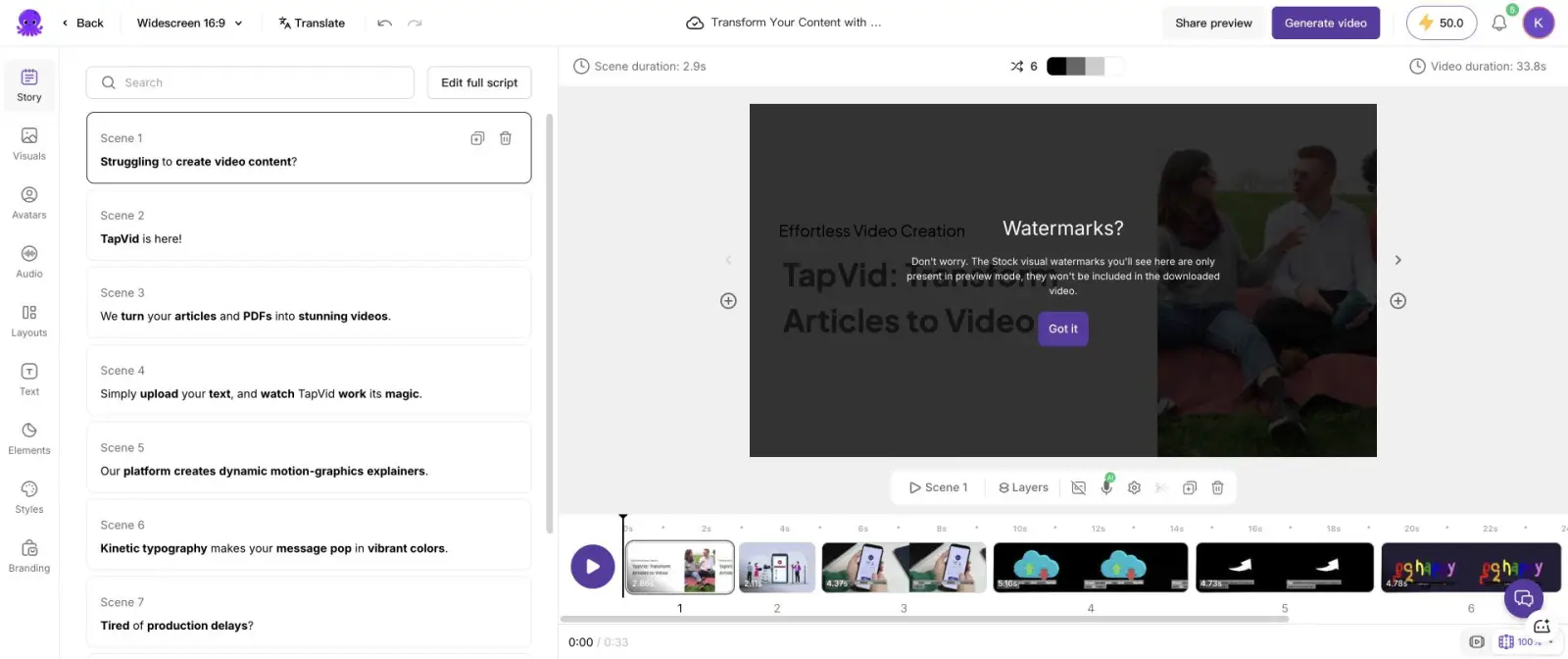
Our Pictory article records a 15-second request that became about 29 seconds in the generated script and 33.8 seconds in the editor. The exported file measured 39.94 seconds. The run produced a complete nine-scene video, but the final output did not fit the requested length.
These durations describe one historical test. They are not a current product limit. TapVid’s PDF example was a separate, longer brief, so it cannot establish a head-to-head duration or accuracy winner.
Archived Pictory editor from the duration audit in our alternatives article.
Review the explanation before the render.
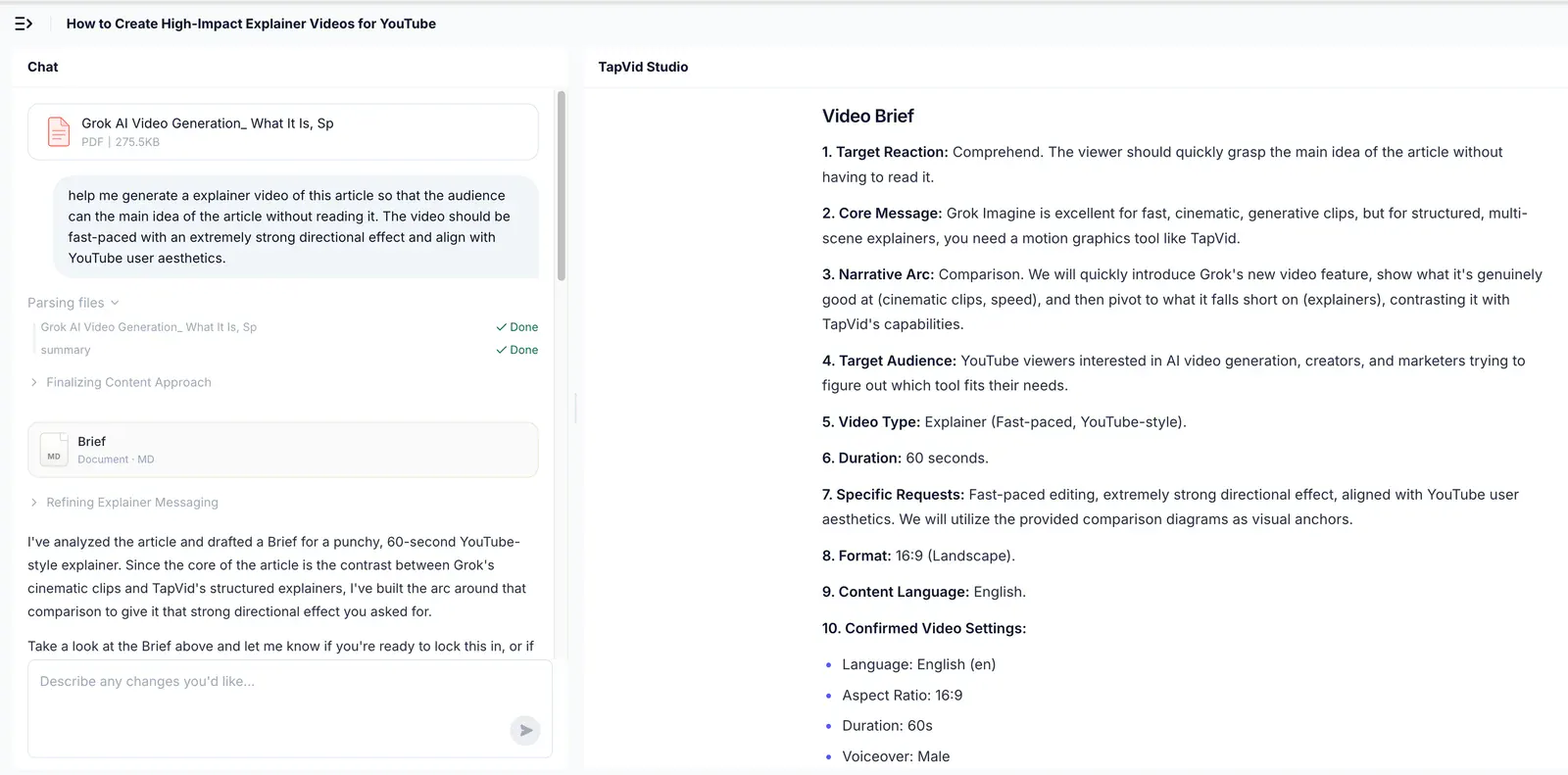
In a separate archived TapVid workflow, a source PDF became a reviewable video brief. The brief made the message, audience, structure, and requested format visible before production.
This is a practical checkpoint: approve the explanation and its source material first, then review the rendered result. It is a workflow example, not a same-input contest against Pictory.
TapVid’s archived PDF-to-brief workflow. Original screenshot.
Choose for the video you need to deliver.
Choose TapVid
Choose TapVid when the scene needs to show a particular product screen, diagram, or sequence, rather than an image broadly related to the topic. Review the source-to-scene match before rendering and check the finished video against your approved material.
Choose Pictory
Choose Pictory when supporting footage and narration are enough to repurpose an article or recording. Its scene-based workflow is a reasonable choice for summaries. Use your own source in a trial to see how much media replacement and duration adjustment remain.
Frequently asked questions
Is accepting text enough to make two tools equivalent?
No. Compare the resulting visual sequence. A related stock scene may be sufficient for a broad summary, while a product mechanic may need its exact screen, asset, or diagram. The right choice depends on what the viewer must be able to recognize and understand.
When should I choose TapVid over Pictory?
Choose TapVid when the scene needs to show a particular product screen, diagram, or sequence, rather than an image broadly related to the topic. Review the source-to-scene match before rendering and check the finished video against your approved material.
When is Pictory the better fit?
Choose Pictory when supporting footage and narration are enough to repurpose an article or recording. Its scene-based workflow is a reasonable choice for summaries. Use your own source in a trial to see how much media replacement and duration adjustment remain.
Were these tools tested with the same input?
These durations describe one historical test. They are not a current product limit. TapVid’s PDF example was a separate, longer brief, so it cannot establish a head-to-head duration or accuracy winner.
Does TapVid guarantee a perfect video?
No. Review the planned words and assets before rendering, and check the final video. TapVid is designed to preserve your supplied content and let you revise individual shots; that does not remove the need for approval.
Where can I check pricing and the full evidence?
Use the linked article below for the archived evidence and the official product websites for current pricing and plan limits. Historical trials and render times are not promises about a current subscription.
Sources & scope
Written by TapVid. Published evidence and product scope reviewed September 15, 2026. Screenshots are historical records, not a claim that today’s interface is unchanged. Official product pages were checked for current scope; no new paid head-to-head test was performed.