
Choose TapVid
Choose TapVid when the repeated job is explaining a product from approved assets and content. The reviewer can work through the brief, outline, and timed script before rendering, keeping the message and its matching visuals in view.
TapVid centers a product explainer on your assets, words, and review checkpoints. InVideo combines video creation and editing with agent-based production and model choices. Both can plan scenes; the useful difference is the scope of work your team needs to manage.
Videos true to your assets. In minutes.
I'd like to add motion graphics and short explanations next to my presenter video about how we spend our 80 years, to help viewers grasp the key numbers.
The useful difference is what your team needs to explain, review, and deliver.
| Your decision |  | InVideo |
|---|---|---|
| Primary job | Explain your product using its real assets and approved words. | Broad video creation, agent-assisted production, and editing. |
| Starting material | Product screenshots, documents, images, and your written brief. | Ideas, scripts, footage, and project context. |
| What to review | The brief, outline, and scene script before rendering; then the video and any revised shots. | Review the agent plan, generated shots, assembly, and model-dependent usage. |
| A good fit | Product explanations where the right words must stay connected to the right assets. | A team regularly produces several different video formats in one workspace. |
Based on our published article and the sources linked below. Compare workflows, then validate them with your own brief.
Our July 27, 2026 article update explicitly accounts for Agent One. It describes a persistent conversational project, context, model choices, and assembly in the editor, using official documentation. The TapVid portion documents a separate source-PDF run with reviewable brief and script checkpoints.
We did not execute a fresh paid Agent One generation for this comparison. The evidence supports workflow scope, not a quality, speed, or cost ranking. Check current settings and terms before budgeting a project.
Read the full article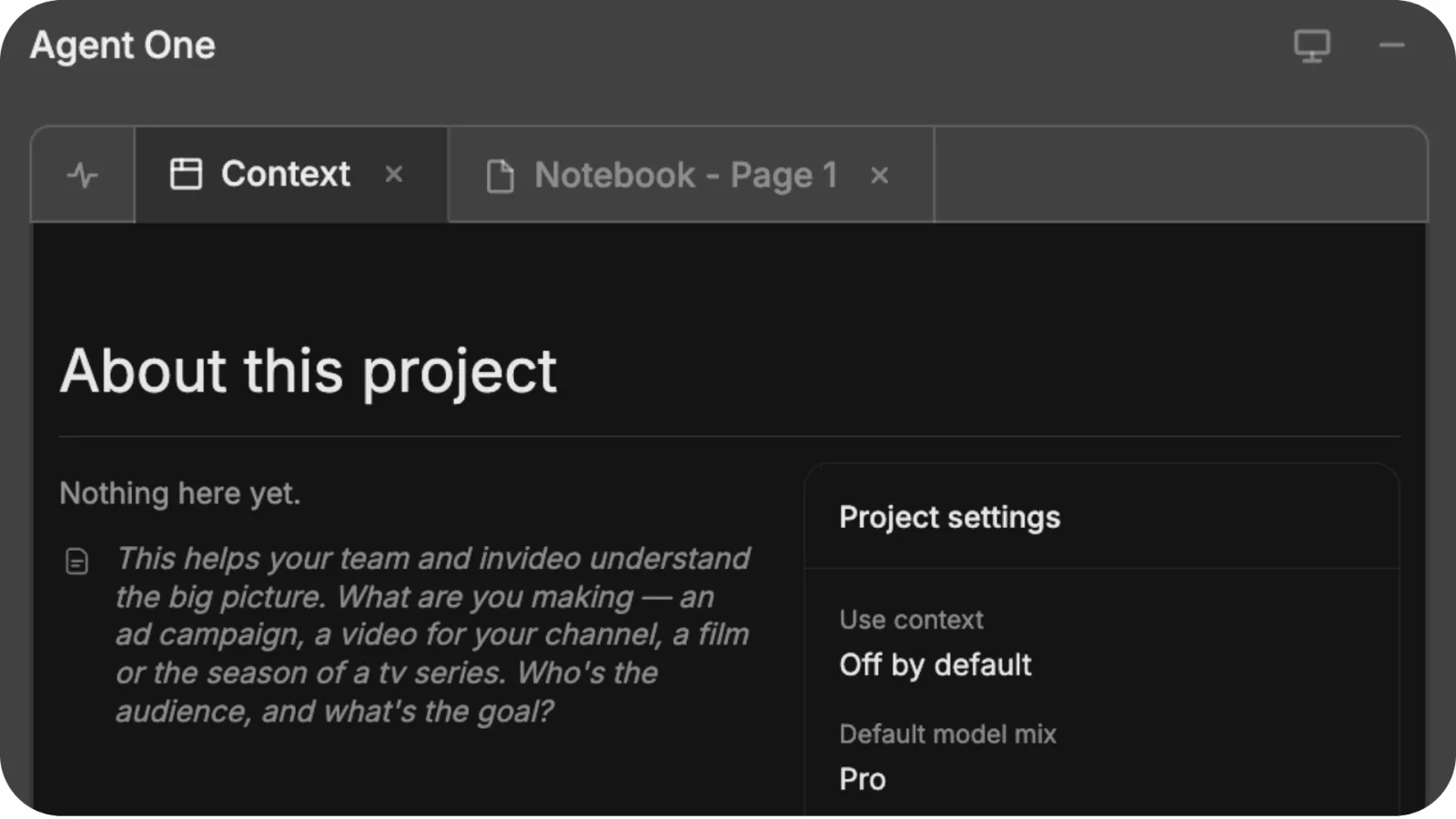
In a separate archived TapVid workflow, a source PDF became a reviewable video brief. The brief made the message, audience, structure, and requested format visible before production.
This is a practical checkpoint: approve the explanation and its source material first, then review the rendered result. It is a workflow example, not a same-input contest against InVideo.
See the documented TapVid workflow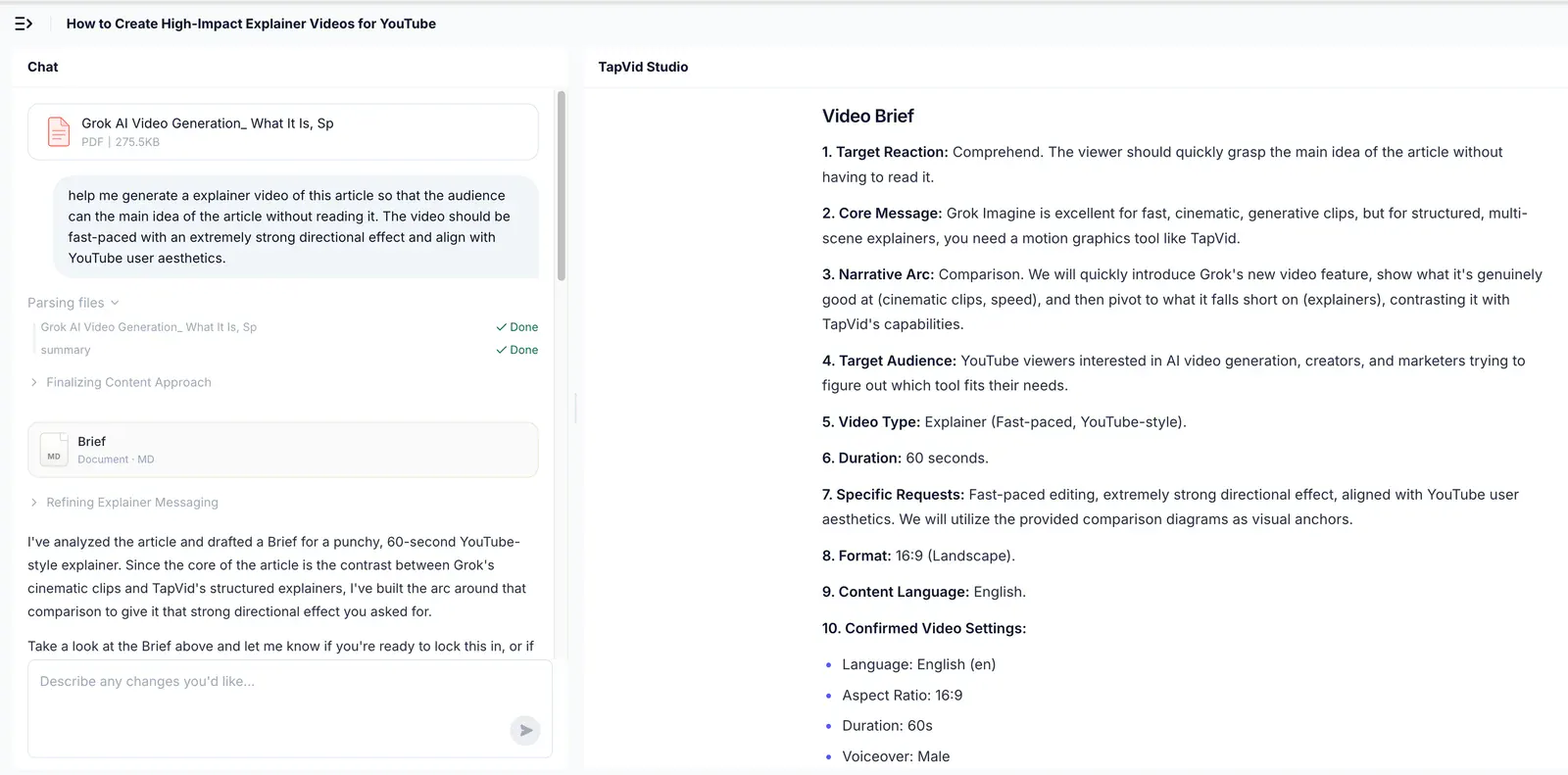
Choose TapVid when the repeated job is explaining a product from approved assets and content. The reviewer can work through the brief, outline, and timed script before rendering, keeping the message and its matching visuals in view.
Choose InVideo when one team needs to explore different generated shots, assemble footage, and edit across a broader set of projects. Its Agent One workflow includes project context and planning; do not evaluate it as a stock-template tool alone.
Yes. The official Agent One guides cited in our article describe both. TapVid is positioned here for a narrower recurring deliverable: an explanation built from your product material, with checkpoints for reviewing the source and visual sequence.
Choose TapVid when the repeated job is explaining a product from approved assets and content. The reviewer can work through the brief, outline, and timed script before rendering, keeping the message and its matching visuals in view.
Choose InVideo when one team needs to explore different generated shots, assemble footage, and edit across a broader set of projects. Its Agent One workflow includes project context and planning; do not evaluate it as a stock-template tool alone.
We did not execute a fresh paid Agent One generation for this comparison. The evidence supports workflow scope, not a quality, speed, or cost ranking. Check current settings and terms before budgeting a project.
No. Review the planned words and assets before rendering, and check the final video. TapVid is designed to preserve your supplied content and let you revise individual shots; that does not remove the need for approval.
Use the linked article below for the archived evidence and the official product websites for current pricing and plan limits. Historical trials and render times are not promises about a current subscription.
Written by TapVid. Published evidence and product scope reviewed September 15, 2026. Screenshots are historical records, not a claim that today’s interface is unchanged. Official product pages were checked for current scope; no new paid head-to-head test was performed.
Compare TapVid with other video tools in our published guides.
What you see is your product: nothing redrawn, nothing rewritten.