TapVid vs Hera: your assets, accurately brought to life.
Your product images. Your approved copy. A video that keeps them together. TapVid is the Explainer Video Engine for teams with a product to explain and details to get right.
From a source document to a reviewable video brief.Archived workflow · Source & limits
Start with the job. Then choose the tool.
Both tools make motion possible. The useful difference is what you bring to the project and what you need to control.
Your decision
Assets to explanation
HeraIdea to animation
Where you start
Your product assets, documents, and approved copy.
An animation idea, prompt, or existing template.
What you direct
The explanation: what is said, shown, and matched in each scene.
The animation: use prompts or manual controls to refine details.
What you review
The brief, outline, and scene script before rendering.
An editable animation, with scene-by-scene direction.
When the brief changes
Change a line or asset in the affected scene, then review the new version.
Prompt for changes or fine-tune the animation yourself.
A good reason to choose it
Your product information and source assets define the deliverable.
Your main task is creating and directing a motion design.
Workflow comparison, not a scored benchmark. Hera: official website checked September 14, 2026. TapVid: current product messaging and archived workflow evidence. View sources.
See the work behind the comparison.
Real screens from our earlier article. Each shows a specific step, with the limits of that evidence kept in view.
Review the explanation before it becomes a video.
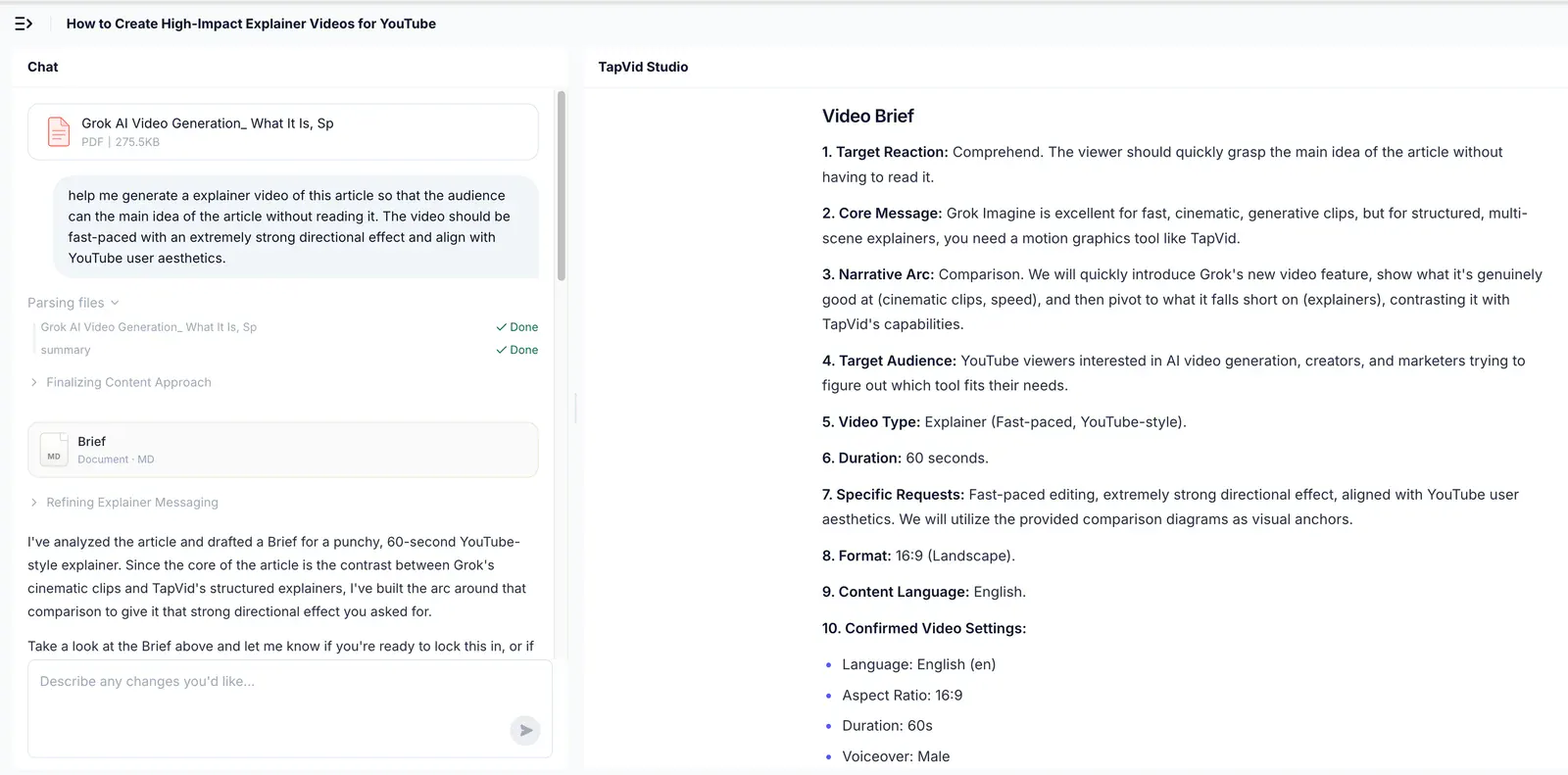
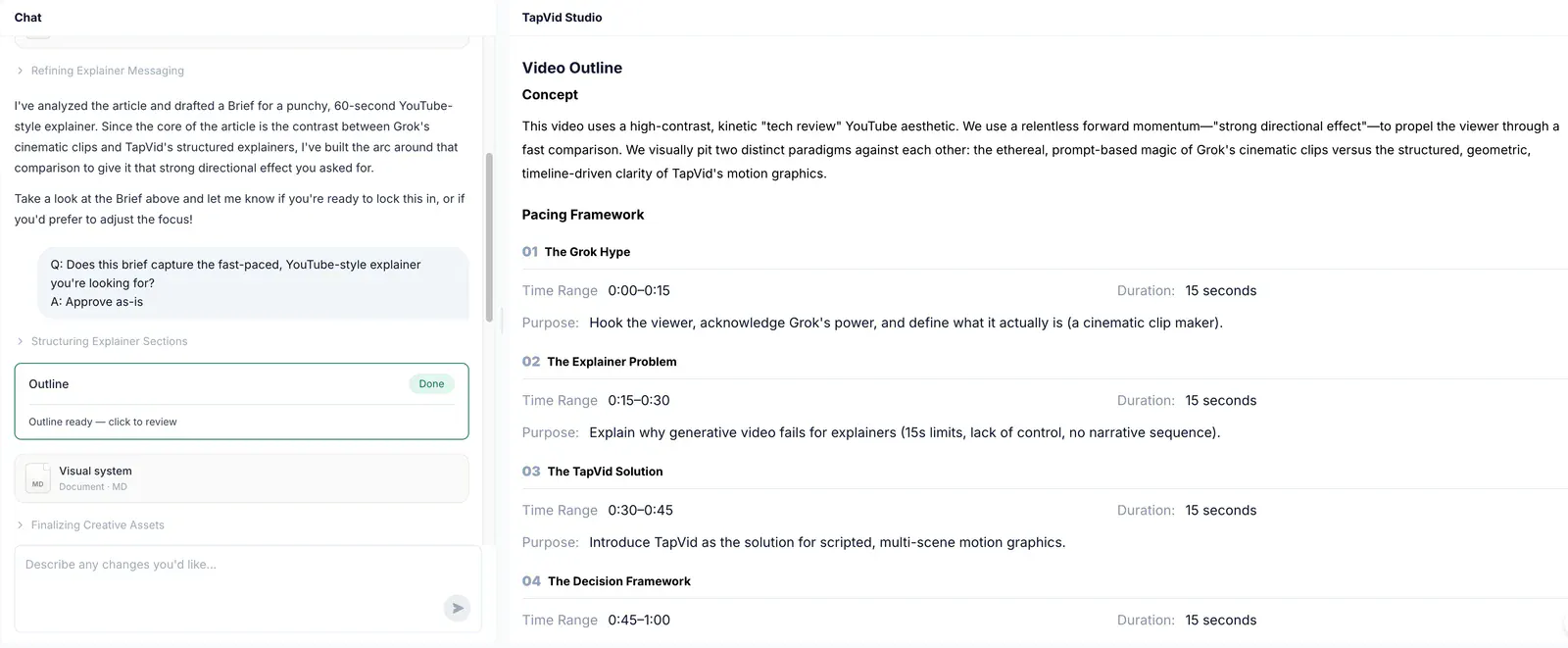
In the archived TapVid test, an uploaded PDF became a brief and an outline. The reviewer could inspect the planned sequence before approving generation.
For a product explainer, use this checkpoint to check the message, the order, and which asset belongs in each scene.
Choose TapVid when your team already has the product assets and copy, and needs an explainer built around them. Review what each scene says and shows before you render.
When is Hera the better fit?+
Hera is worth considering when your starting point is an animation idea or template and you want to direct the motion with prompts or manual edits. Its current website emphasizes editable animation and scene-by-scene direction.
Does TapVid guarantee a perfect video?+
No. Review the output before delivery. TapVid’s approach keeps supplied assets and approved wording out of the rewriting step; that does not mean every generated scene is free of visual or timing issues.
Were these tools tested with the same input?+
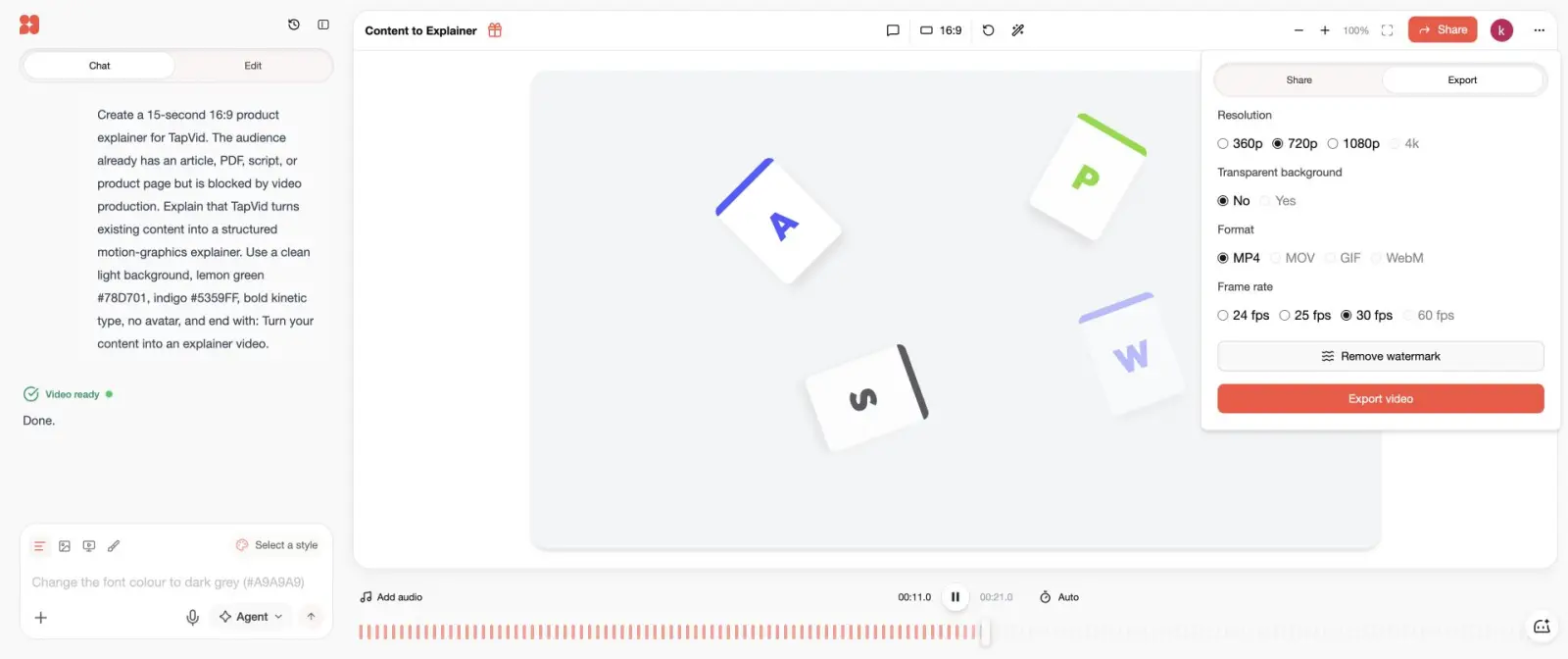
No. The archived Hera run used a short product-video prompt. The TapVid workflow shown here used an article PDF. These examples show how the workflows operate; they are not a head-to-head speed or quality benchmark.
This comparison is written by TapVid. Current Hera positioning was checked on September 14, 2026; screenshots come from our archived article. The two runs used different inputs, so they do not establish a speed, cost, or quality winner. Historical screens may differ from today’s interfaces.