
TL;DR
Start with software workflows, science explainers, business case studies, or language learning if you want a clear visual format and a repeatable idea pipeline. Choose history, psychology, book analysis, or data stories when research is your advantage. Treat finance, health, and legal topics as expert-only. Avoid generic compilations, copied clips, and templated videos that add little original value.
The best faceless YouTube niche is not the one with the loudest RPM claim. It is the one where you can publish useful, original videos every week without depending on copied clips or mass-produced scripts. I ranked nine options by the work that actually determines whether a channel lasts: expertise, research, visual fit, repeatability, and policy risk.
01
What makes a faceless niche worth building?
A faceless channel removes the presenter from the frame. It does not remove the creator from the work. The research, examples, opinions, structure, and editing still need a point of view. That distinction matters more now that the YouTube channel monetization policies explicitly treat repetitive, mass-produced content as inauthentic and can deny monetization to reused material that adds little original commentary or educational value.
That is why I would not pick a niche from an RPM table alone. YouTube does not publish an official niche-by-niche RPM chart, and the estimates repeated across creator blogs vary by audience location, season, format, watch time, and advertiser demand. A high theoretical rate is useless if the videos are expensive to research, hard to visualize, or indistinguishable from hundreds of automated channels.
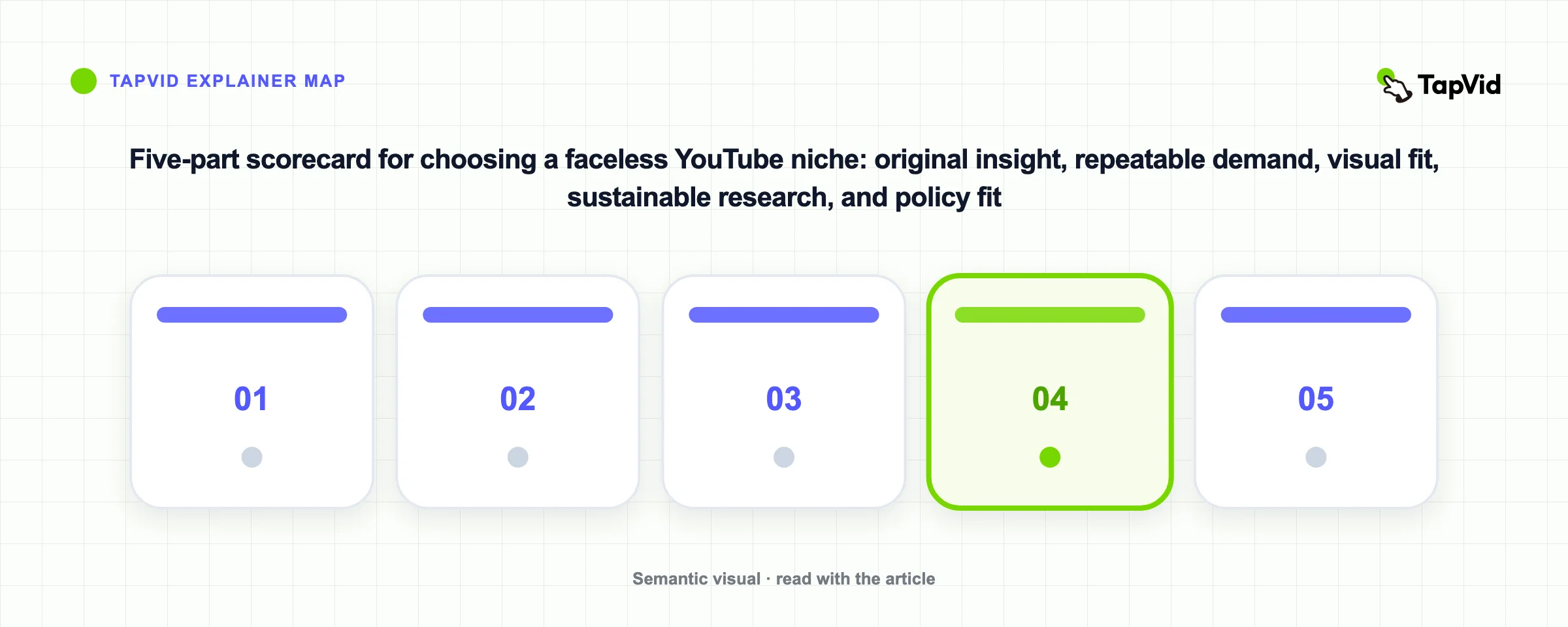
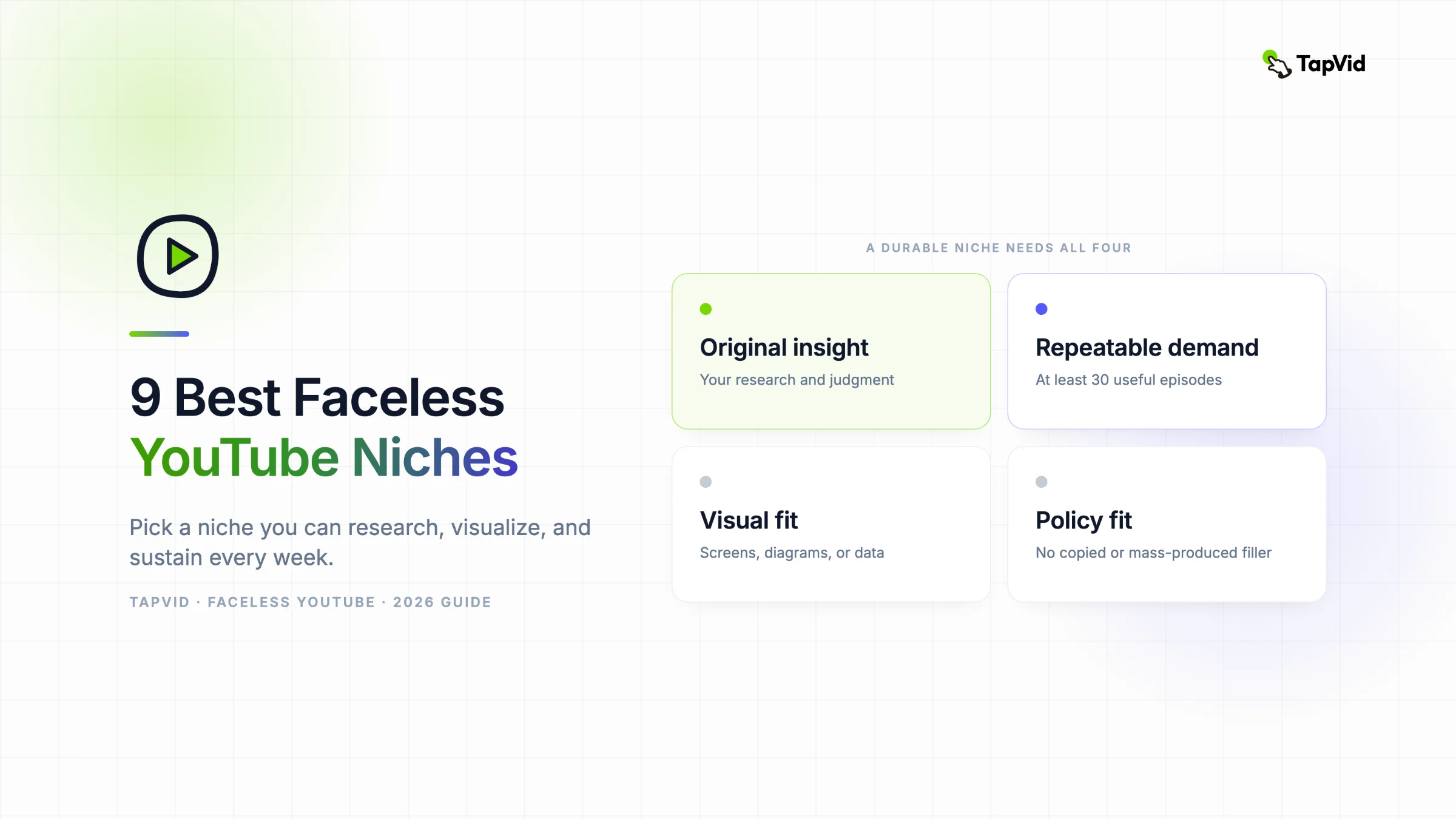
I use five filters. First, can you add original judgment or expertise? Second, can you list at least 30 useful episode ideas? Third, can graphics, examples, screen recordings, or documents carry the story without a face? Fourth, can you research the subject every week without cutting corners? Fifth, would each episode still teach something if the voice and visual style changed? If a niche fails two of those tests, I would not build a channel around it.
02
The best faceless YouTube niches at a glance
| Niche | Best format | Main advantage | Main risk |
|---|---|---|---|
| Software and AI workflows | Screen-led tutorials and workflow explainers | Clear search intent and endless product changes | Shallow tool roundups become obsolete fast |
| Science and space | Animated concept explainers | Strong curiosity and visual storytelling | Research and fact checking take time |
| Business case studies | Narrated timelines and system diagrams | Stories connect naturally to products and careers | Weak sourcing turns analysis into gossip |
| Language learning | Examples, quizzes, and visual lessons | Repeatable curriculum and returning viewers | Generic phrase lists are easy to copy |
| History and forgotten systems | Maps, timelines, and archive-led explainers | Evergreen curiosity with a large idea pool | Copyright and source quality require care |
| Psychology and behavior | Scenario-based explainers | High personal relevance and strong hooks | Easy to overclaim research findings |
| Books and big ideas | Original analysis with visual summaries | Built-in topic structure | Straight summaries add little value |
| Data stories | Charts, maps, and narrated reports | Evidence creates a defensible point of view | Data cleaning and context are real work |
| Product and marketing breakdowns | Teardowns and before-after explainers | Commercially relevant audience | Needs specific examples, not generic advice |
03
1. Software and AI workflow tutorials
This is my first choice for a creator who already uses software to do real work. A face adds little to a tutorial about cleaning audio, building a report, or turning a long article into a short video. The proof is on screen: the starting state, the actions, and the result.
I checked that production loop with a real TapVid project rather than a hypothetical prompt. The input was a 275.5 KB PDF about Grok AI video generation. I asked TapVid to turn the article into a fast-paced explainer that let a YouTube viewer understand the main idea without reading the source. The project kept the source file and prompt visible beside the generated brief, so the editorial chain was easy to audit.
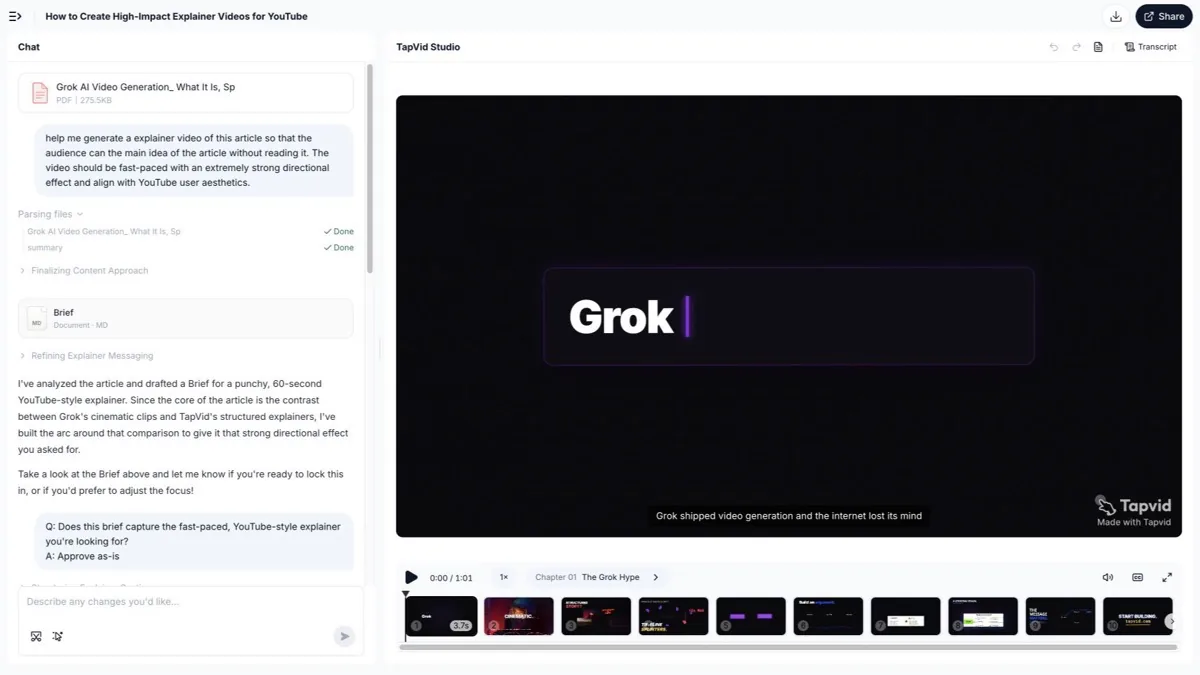
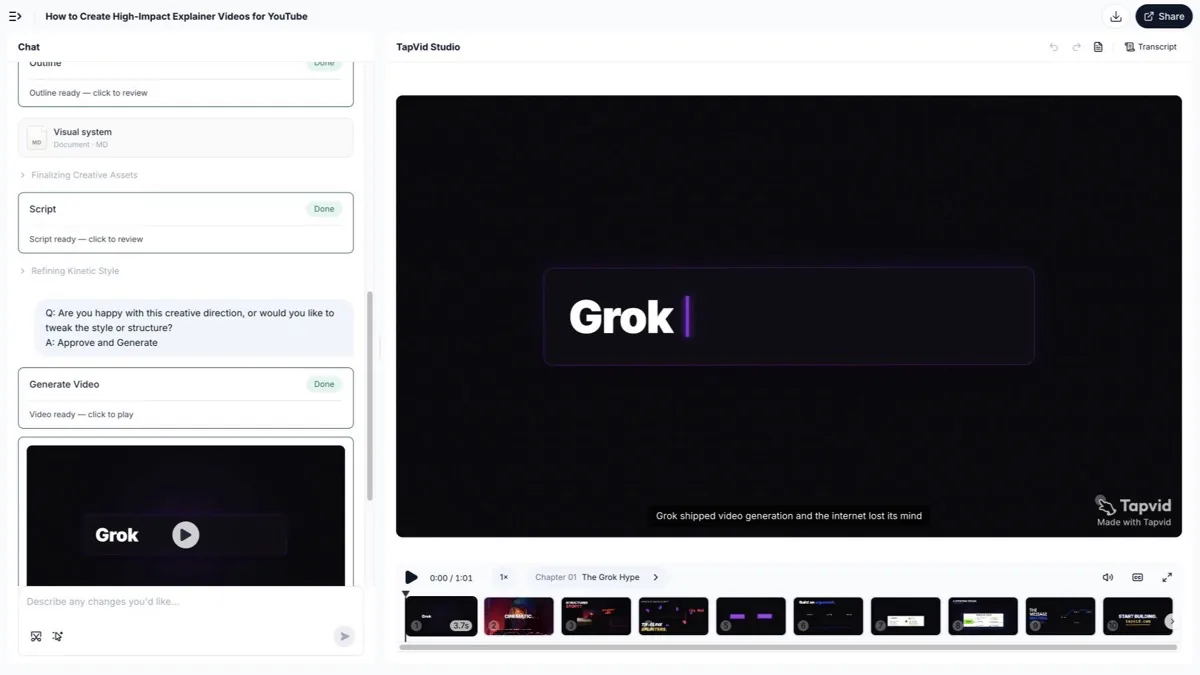
The finished draft ran 1 minute 1 second across 10 scenes. Scene one lasted 3.7 seconds, and the workflow exposed separate checkpoints for the brief, outline, visual system, and script before generation. The strongest part was structure: the article became a clear contrast between cinematic AI clips and structured explainers. The part I would still review manually is emphasis. The first draft leaned hard on the Grok-versus-TapVid contrast, so I would check every product claim and trim any scene that makes the comparison feel more important than the lesson.
The moat is not knowing that a tool exists. It is showing a workflow that saves time, explaining why each step is there, and being honest about where the tool fails. A channel that publishes generic lists of ten AI tools is easy to replace. A channel that solves one specific job for one specific kind of user builds trust. For example, start with a concrete workflow such as turning a PDF into a video, then show how an AI explainer video generator handles the visual explanation.
- Good first videos: turn a research PDF into a two-minute explainer; compare three ways to caption a tutorial; build a repeatable short-form clipping workflow.
- Best visual system: screen recording for proof, motion graphics for concepts, and a before-after result at the end.
- Watch-out: date every tutorial and update or redirect old videos when the interface changes.
04
2. Science and space explainers
Science works unusually well without a presenter because the subject itself deserves the screen. Orbits, cells, energy systems, geological time, and engineering mechanisms become clearer through diagrams and animation than through a talking head.
The best version is narrower than "interesting science facts." Pick a repeatable lens: everyday objects explained through physics, current space missions, medical history without personal advice, or one misunderstood concept per episode. Your research notes can become the script, citations can live in the description, and the visual plan can follow the causal chain.
- Good first videos: why airplane windows are rounded; what actually happens during a solar storm; how heat pumps move heat.
- Best visual system: one question, one mechanism, one visual model, one practical takeaway.
- Watch-out: use primary or authoritative sources and separate established findings from interpretation.
05
3. Business case studies
Business stories give you built-in narrative: a company starts with a constraint, makes a bet, finds distribution, and either compounds or breaks. The format supports timelines, simple unit economics, product screenshots, and market maps, so it remains engaging without a host on camera.
Do not retell a press release. A useful case study answers a question: why did this feature create growth, what made the pricing work, or how did a small company beat a better-funded competitor? Use public filings, founder interviews, product archives, and credible reporting. Then label your inference as inference.
- Good first videos: the distribution loop behind a breakout product; why a pricing change worked; the launch decision that killed a promising category.
- Best visual system: tension, decision, mechanism, evidence, lesson.
- Watch-out: avoid invented revenue numbers and anonymous claims that cannot be traced.
06
4. Language learning
Language learning has a natural return loop. Viewers do not need one answer once. They need progressive practice, correction, examples, and review. That makes a curriculum-based faceless channel more durable than a pile of isolated phrase videos.
Choose one learner and one situation. Business English for product managers is clearer than "learn English." Japanese listening for travelers has a more obvious episode plan than "Japanese tips." Build recurring series such as five-minute listening drills, one grammar contrast, or one real conversation broken into beats.
- Good first videos: three polite ways to disagree in a meeting; a slow listening drill at an airport; the difference between two commonly confused forms.
- Best visual system: large examples, color-coded structure, narration, and a short recall test.
- Watch-out: synthetic pronunciation needs native review before publication.
07
5. History and forgotten systems
History gives you a near-endless idea bank, but the strongest channels organize it around systems rather than trivia. Trade routes, food supply, city design, failed technologies, and administrative inventions all create cause-and-effect stories that maps and timelines can carry.
A narrow lens helps. "How cities solved waste" can become a series. "Random history facts" cannot build the same expectation. Use public-domain archives where possible, keep a source ledger, and transform every image through context rather than assembling clips with a voiceover.
- Good first videos: how pneumatic mail worked; why a city moved its river; the forgotten system behind early supermarkets.
- Best visual system: map, timeline, primary image, and one consequence that reaches the present.
- Watch-out: check image rights and do not treat one dramatic anecdote as representative history.
08
6. Psychology and behavior
People click on psychology because the question feels personal: why do I procrastinate, why do groups make worse decisions, or why is a price framed this way? Scenarios and diagrams can make these mechanisms clear without a presenter.
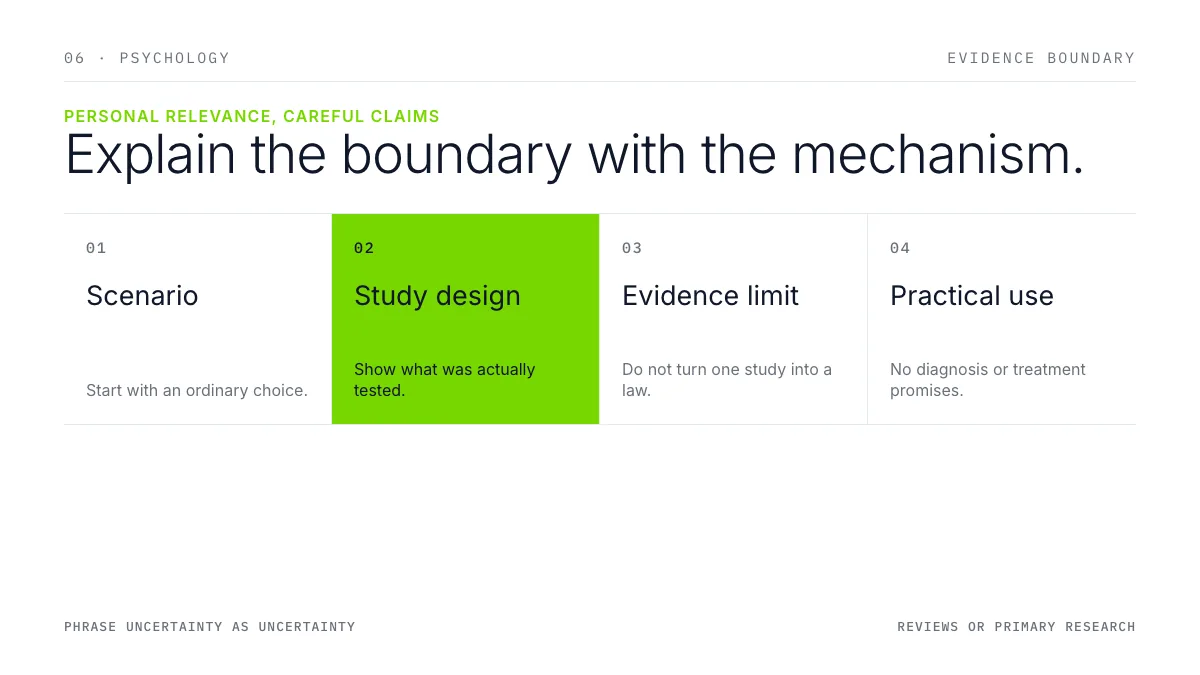
The danger is turning a limited study into a universal law. Good videos explain the study design, what the evidence supports, what it does not support, and how the idea might show up in ordinary life. Avoid diagnosing viewers or promising treatment outcomes.
- Good first videos: why unfinished tasks stay mentally active; how default options shape choices; when social proof stops helping.
- Best visual system: relatable scene, mechanism, study context, practical boundary.
- Watch-out: cite reviews or primary research and phrase uncertain findings with uncertainty.
09
7. Books and big ideas
Book content earns its place when the book is the starting point, not the finished product. A chapter-by-chapter recap is easy to automate and gives viewers little reason to trust your channel. An argument that compares the book with evidence, another framework, or a real case is much harder to replace.
Choose a defined shelf: product strategy, creator economics, behavioral science, or classic political thought. Each episode can explain one idea, test it against a case, identify where it breaks, and end with a question the viewer can use.
- Good first videos: one idea from a classic that aged badly; two books that disagree about incentives; a framework tested against a modern company.
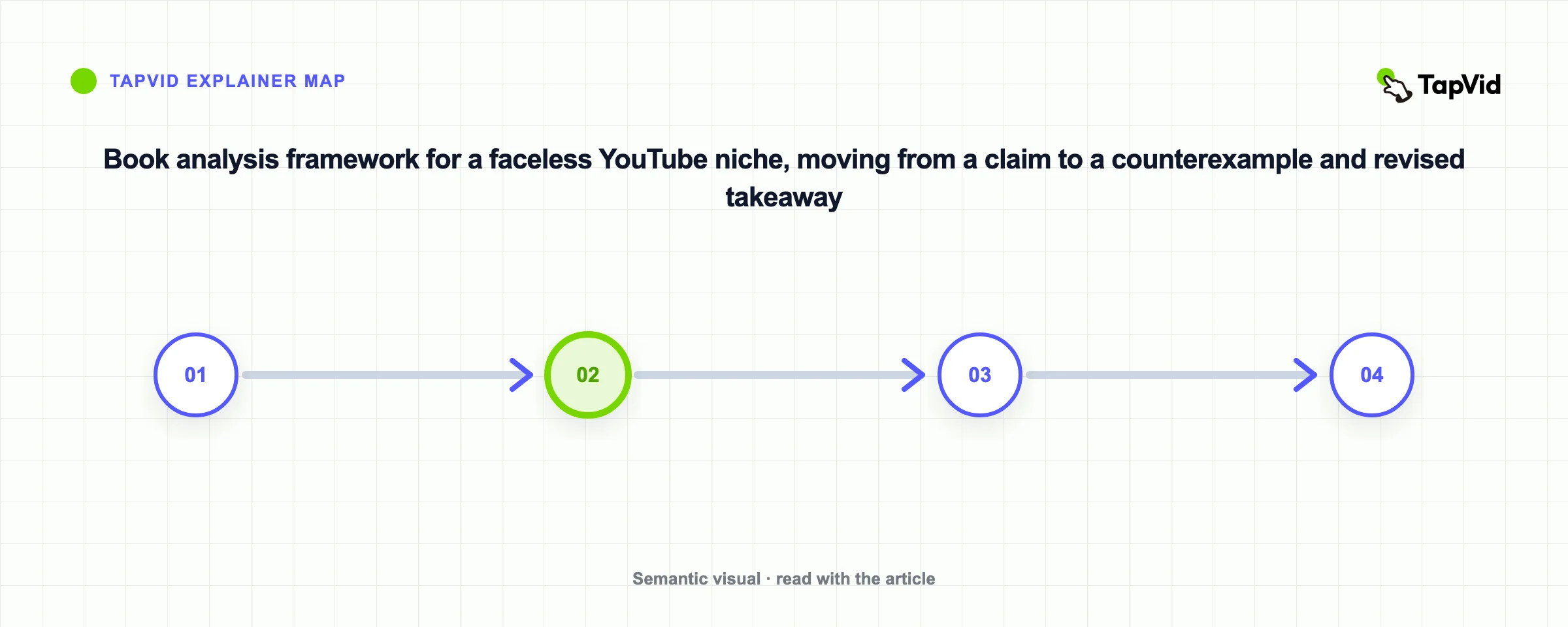
- Best visual system: claim, model, counterexample, revised takeaway.
- Watch-out: quote briefly, link the source, and add analysis rather than reproducing the work.
10
8. Data stories
Data gives a faceless channel a visible reason to exist. Instead of asking viewers to trust a personality, you can show the pattern, explain the denominator, and walk through the uncertainty. Public datasets also produce repeatable topics across cities, industries, sports, education, or creator platforms.
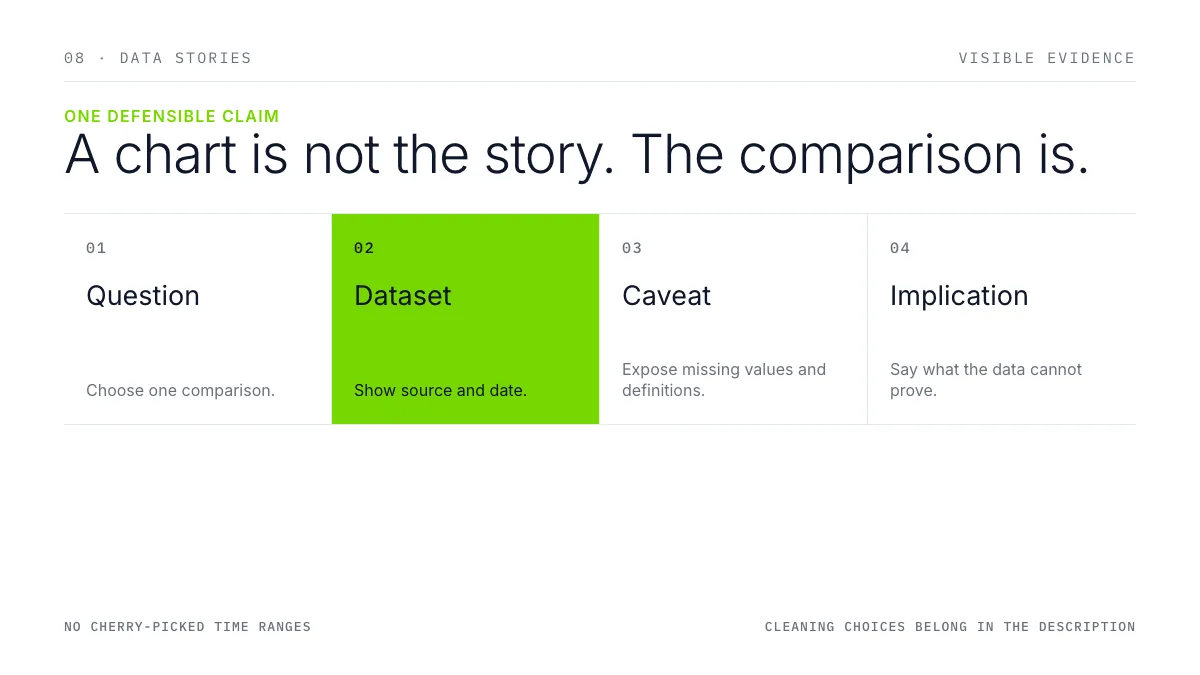
The hard part is not making a chart. It is choosing the right comparison and explaining what the data cannot prove. Build the episode around one surprising but defensible claim, show the source and date on screen, and include the cleaning choices in the description.
- Good first videos: which cities changed fastest on one measure; what a decade of product prices really shows; how one platform category grew and then flattened.
- Best visual system: question, dataset, comparison, caveat, implication.
- Watch-out: never hide missing values, changed definitions, or a cherry-picked time range.
11
9. Product and marketing breakdowns
This niche is a strong fit for designers, marketers, and founders who already notice why products communicate the way they do. You can dissect an onboarding flow, a landing page, a launch video, or a pricing structure with screenshots and annotations.
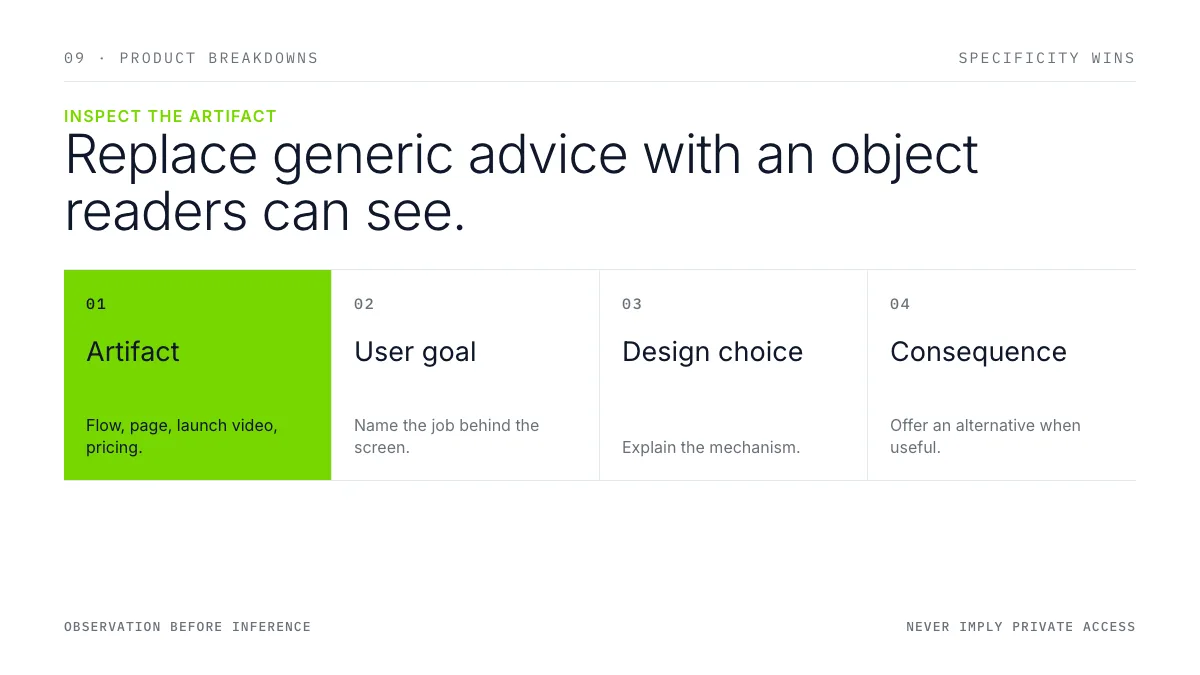
Specificity is the whole game. "Five marketing tips" is generic. "Why this signup flow asks for a URL before an email" creates a concrete object to inspect. The strongest videos show the artifact, name the user problem, explain the design choice, and offer a better alternative where relevant.
- Good first videos: a pricing page teardown; three onboarding choices that reduce time to value; why one product demo keeps attention.
- Best visual system: artifact, user goal, design choice, consequence, alternative.
- Watch-out: do not imply access to private company data. Separate observation from inference.
12
Niches I would only enter with real credentials
Personal finance, health education, and legal explainers can attract high-intent audiences, but the responsibility is higher than the production convenience suggests. A polished faceless format can make weak advice look more authoritative than it is.
I would enter these areas only with subject-matter expertise, a qualified reviewer, a narrow scope, and a documented correction process. Disclaimers do not rescue inaccurate advice. If your advantage is production rather than expertise, collaborate with someone qualified or choose a neighboring topic with lower harm.
13
Faceless formats to avoid
- Copied clip compilations with a thin voiceover. Rights risk and reused-content risk arrive together.
- Generic motivation assembled from stock footage and synthetic narration. There is little original value and almost no defensible topic moat.
- Straight Reddit or forum readings. Permission, privacy, and originality are all weak unless the creator adds reporting and analysis.
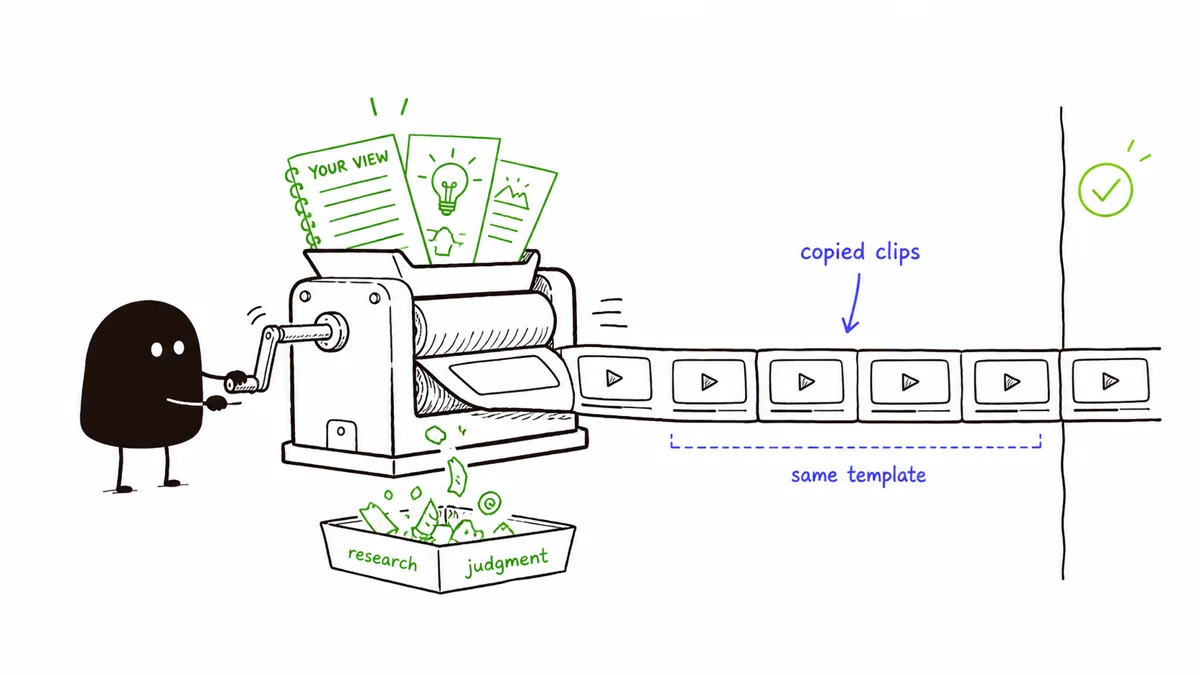
- Mass-produced fact videos built from the same template. A template can support a format, but it cannot be the substance.
- Celebrity gossip based on unverified posts. Fast output does not compensate for sourcing and defamation risk.
YouTube says reused content can be monetizable when viewers can tell there is a meaningful difference, such as critical review, commentary, a rewritten narrative, or substantive editing. The safest strategy is not to ask how close you can get to the line. Build a format where your research and interpretation are obviously the product.
14
A 30-day plan to validate your niche
Do not spend a month naming and branding a channel before testing whether the work is sustainable. Use the first 30 days to validate the production loop.
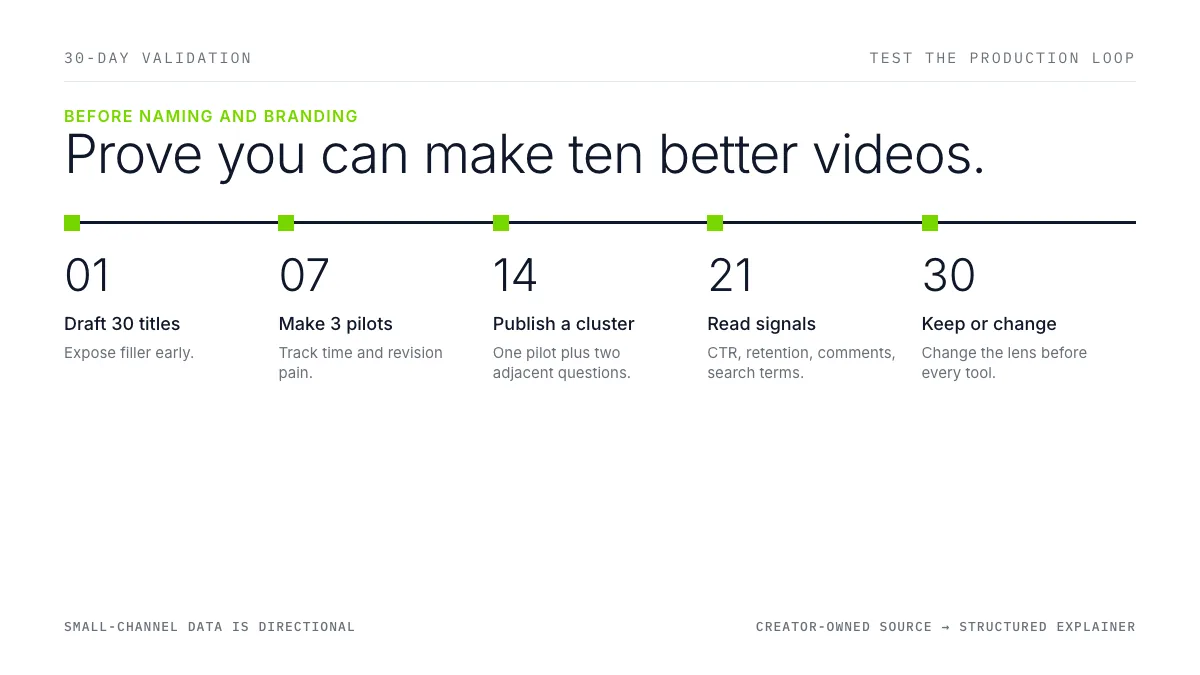
- Day 1: write one audience sentence, one topic boundary, and 30 episode titles. If the last ten are filler, narrow or change the niche.
- Days 2 to 7: make three pilot scripts in different formats. Track research time, script time, visual sourcing time, and revision pain.
- Days 8 to 14: publish the strongest pilot and make two follow-ups that answer adjacent questions. Keep the packaging consistent enough to compare.
- Days 15 to 21: review click-through rate, first 30-second retention, comments, and search terms. Treat small-channel data as directional, not definitive.
- Days 22 to 30: keep the format only if you can see a path to ten better videos. Otherwise change the lens before changing every tool.
For production, start with material you already own: a script, research notes, an article, a PDF, or a product workflow. TapVid is an Explainer Video Engine that turns that creator-owned source into a structured motion-graphics explainer. In the real test above, a 275.5 KB PDF became a 61-second, 10-scene draft. Facts, emphasis, and pacing still needed human review.
15
Frequently asked questions
What is the best faceless YouTube niche for beginners?
Software workflows, narrow science explainers, and language lessons are strong starting points because each has a clear visual format and a repeatable problem set. The best choice is still the one where you have enough experience to add original value.
Can a faceless YouTube channel be monetized?
Yes. A channel does not need an on-camera host. YouTube focuses on originality and viewer value. Reused or mass-produced content with little commentary or transformation can be denied monetization.
Which faceless niches make the most money?
There is no official YouTube RPM table by niche. Finance, software, and business audiences can attract advertisers with higher bids, but revenue also depends on audience country, format, watch time, season, and viewer intent. Pick a niche you can serve well before optimizing for an estimated rate.
How many videos should I test before choosing a niche?
Make at least three serious pilot videos and draft 30 episode titles. Three pilots expose production difficulty; 30 titles reveal whether the idea pipeline is real. Do not judge a niche only by the views on one upload.
Is AI-generated faceless content allowed on YouTube?
AI tools can be part of production, but the output still needs original value and must follow YouTube policies. Review facts, rights, disclosure requirements, and whether the final video feels mass-produced or meaningfully authored.
Do faceless videos need original narration?
Not necessarily, but narration, visuals, and editing should form an original work. A synthetic voice over copied footage or lightly rewritten material is a weak foundation. Original research, examples, structure, and interpretation matter more than whether the voice is human.