
The keyword "storyboards" still matters in AI-native production. Generative tools are faster, but they need clearer direction to produce usable scenes. This guide shows how to structure storyboards so outputs are consistent and conversion-focused.
01
Why AI workflows still depend on storyboards
AI tools generate quickly, but speed can amplify weak planning. Storyboards force teams to decide what each scene must communicate before generation begins.
That upfront clarity reduces random output variation and improves narrative continuity across scenes.
02
How to structure storyboard inputs for AI generation
Include camera behavior, subject focus, text hierarchy, and transition intent per panel. This makes generated drafts more controllable and easier to refine.
Avoid vague scene descriptions. Specific guidance on movement and purpose yields stronger first-pass outputs and fewer retry cycles.
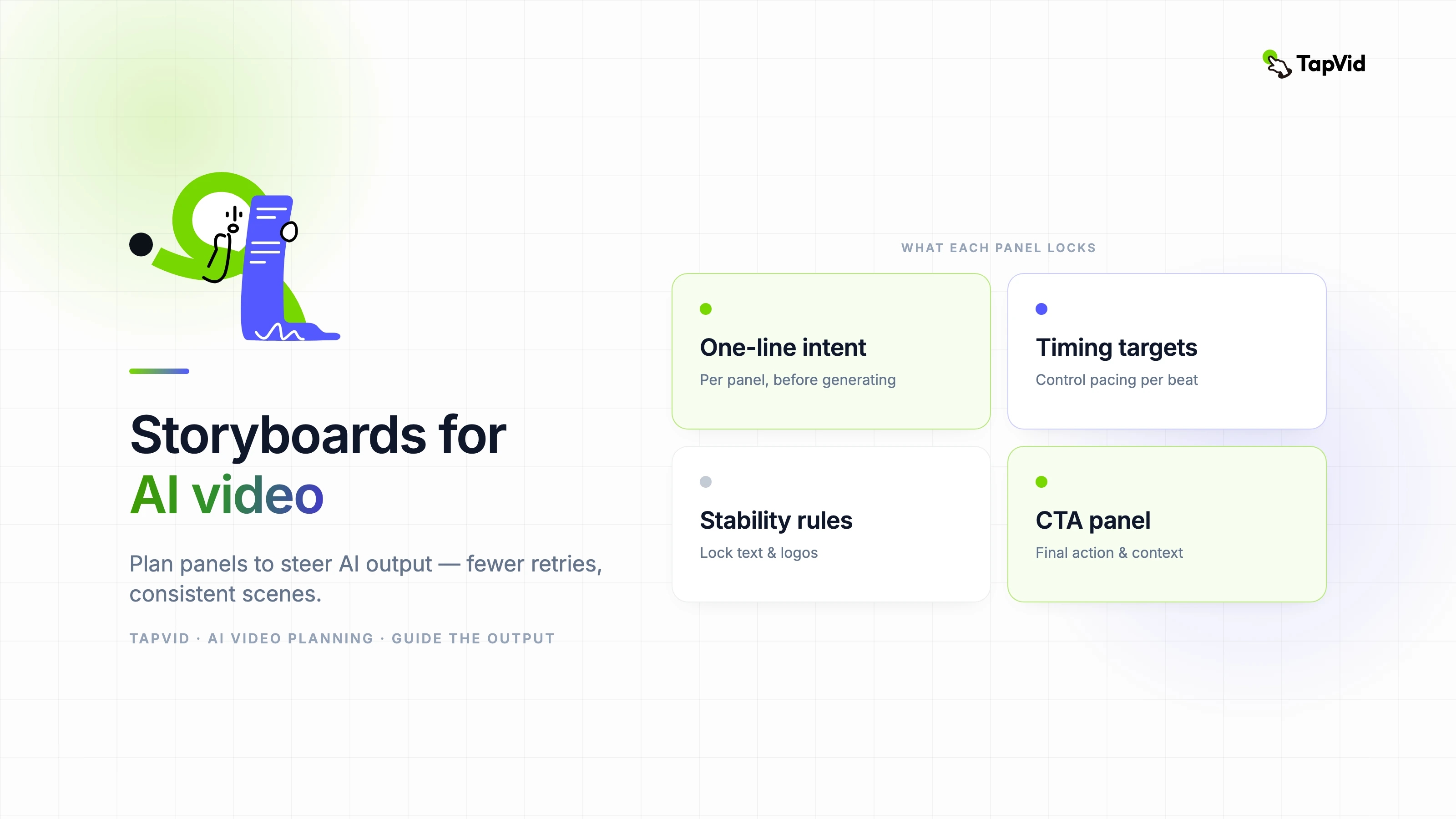
- Write one sentence of intent for every storyboard panel.
- Add timing targets for each beat to control pacing.
- Specify stability constraints for text and logos.
- Use a final panel for CTA context and action.
03
Operational benefits for teams
Teams with storyboard discipline produce more consistent output across channels because every adaptation starts from the same narrative skeleton.
This also improves collaboration between marketing, product, and creative roles by giving everyone a common review layer.
04
Feature path for storyboard-driven production
For instructional and support scenarios, use https://tapvid.ai/feature/help-center-video after storyboard approval to maintain explanation clarity.
For audience segmentation and role-based messaging, map storyboard branches to https://tapvid.ai/feature/feature-announcement-video and tailor sequence emphasis per segment.
05
Frequently asked questions
Do storyboards slow teams down? No. They reduce expensive revisions later in production.
What is the minimum storyboard unit? A panel with objective, visual action, and timing note.
How often should storyboard templates be updated? Review monthly using performance data and revision patterns.