Ready to adapt
Full prompt
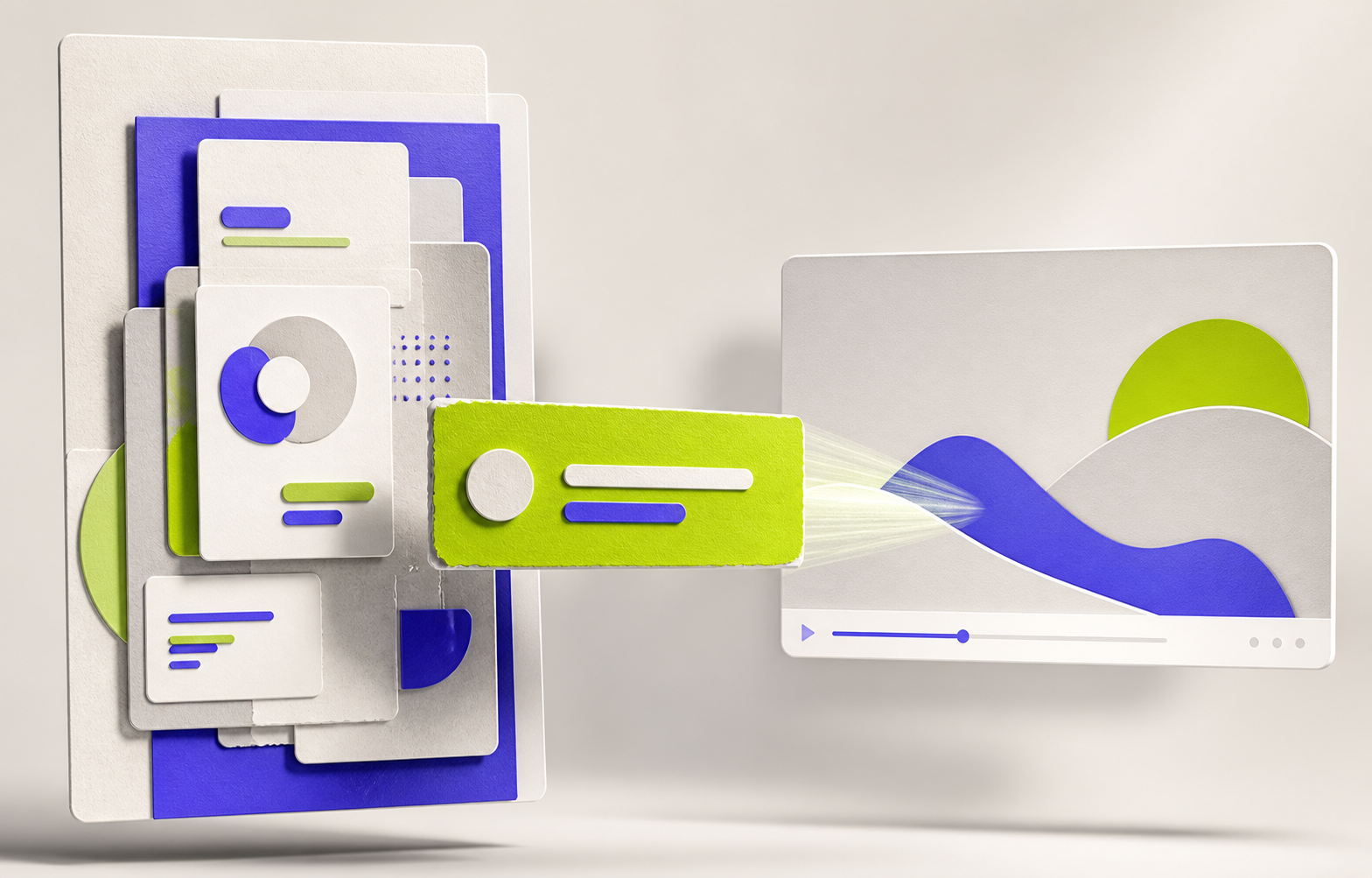
Create a polished 8-second 1:1 video about [SUBJECT]. Use [SUBJECT], [BRAND_COLOR], [KEY_MESSAGE], [INSIGHT] as production context and narrative intent, never as words to render in-frame. Treat [SUBJECT] as an editorial insight moving from an abstract highlight bar into a simple visual metaphor. Use shapes, spacing, and motion to clarify one idea without rendering quotations, data, annotations, paragraphs, or decorative charts that imply nonexistent evidence. Use a flat editorial composition with subtle paper depth, one slow crop inward, and a precise snap to the visual takeaway. Build a clear visual hierarchy around the meaning of [KEY_MESSAGE], using [BRAND_COLOR] as a controlled accent rather than flooding the frame. Maintain stable object identity, coherent lighting, abstract interface geometry with no microcopy, and physically plausible motion across every cut. Return to a clean abstract newsletter card with blank headline and CTA safe areas for post-production copy. Reserve clean negative space for post-production titles, captions, calls to action, and user-supplied branding. No generated readable text, labels, dates, numbers, interface copy, testimonials, or unsupported claims. No logos or invented brand marks. Avoid random scene changes, warped interfaces, duplicated objects, floating artifacts, aggressive flicker, and generic stock-footage styling.
Variables
Replace only what you can verify. Keep brackets visible when an input is still unknown.
- [SUBJECT]
- Subject
- Example: your product, idea, or campaign
- Name the single product, concept, or campaign the video must keep visually consistent.
- [BRAND_COLOR]
- Brand color
- Example: #78d701
- Use one controlled accent color; add readable brand copy later in post-production.
- [KEY_MESSAGE]
- Key message
- Example: the one point viewers must remember
- Use this as narrative intent only. Do not ask the model to render the words in-frame.
- [INSIGHT]
- Source insight
- Example: Clarity compounds faster than output
- Provide the source idea as creative context; add the exact sentence later in editing.
Reference plan
- 1Reference 1: a clean subject or product image that establishes shape, material, and identity.
- 2Reference 2: a brand-board frame showing color, typography, spacing, and intended visual mood.
Timing map
0–2s
Establish the subject and visual question with one readable focal point.
2–6s
Reveal the core transformation or information in two controlled beats.
6–8s
Resolve on the key message and a clean, brand-ready end frame.
Guardrails
- Keep the subject visually consistent across all shots and transitions.
- Generate no readable text or logos; reserve clean safe zones for post-production copy and branding.
- Prioritize legibility and controlled motion over spectacle or excessive camera movement.
Evidence ledger
- Model
- Dreamina Seedance 2.5
- Release source checked
- 2026-08-07
- Prompt status
- Editorially reviewed; not yet benchmarked by TapVid.
- Release source
- Official Seedance 2.5 page