
The most recognizable motion design in the world doesn't look accidental — and it isn't. Behind every brand campaign with a distinctive visual rhythm is a system that someone built deliberately: a set of decisions about timing, color sequencing, and typographic behavior that get applied consistently across every asset. In this post I want to show you exactly how those systems are constructed, because building one is a skill, not an accident.
01
Why motion design is a brand asset, not just a production step
The studios that produce consistently excellent brand video work treat motion design as a brand asset — something that gets documented, versioned, and protected — not as a production decision made fresh on every project.
A motion design system includes defined transitions, easing curves, typographic animation behavior, color sequencing, and logo treatment standards. When these are documented, any animator on the team can produce work that feels like it came from the same visual identity. Without documentation, every video reinvents the wheel and the brand accumulates visual inconsistency over time.
The brands with the most recognizable motion identities — think major tech product launches or global sportswear campaigns — have these systems. The motion language is as deliberate as the static brand guidelines.
02
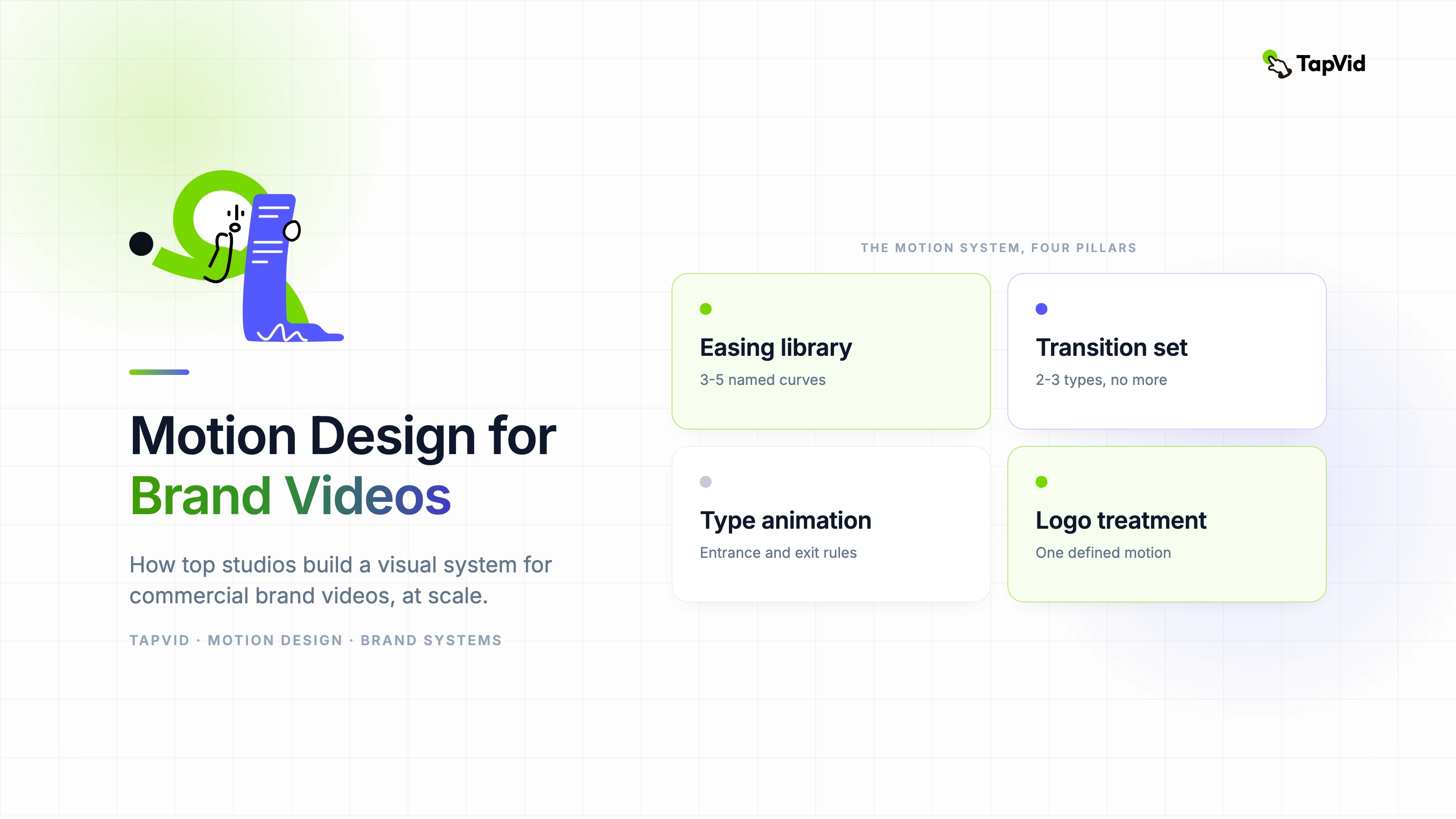
The five components of a professional motion design system
- Easing library: define 3-5 named easing curves (brand-ease-in, brand-bounce, brand-settle) used consistently across all scenes.
- Transition vocabulary: establish 2-3 transition types maximum — wipe, fade, cut — and apply them consistently. Variety creates chaos.
- Type animation rules: specify entrance and exit behavior for every typographic element. Headlines, subheads, and body copy each behave differently but predictably.
- Color sequence logic: define which brand colors appear in which order and under which scene conditions.
- Logo motion treatment: a single defined animation for the logo mark, used identically across all brand video.
03
How AI is changing motion design production without changing design thinking
The most important thing to understand about AI in professional motion design is what it does not change: the design thinking. Brand strategy, visual hierarchy, storytelling structure — these remain human decisions. What AI changes is the speed at which those decisions get translated into moving assets.
In our studio, AI motion tools have shortened the time between storyboard approval and first animated draft from two to three days to four to six hours. That change is significant for client feedback cycles. It also means more creative iterations happen before the budget runs out.
The practical integration is to use AI for blocking and timing — getting the structural animation right — and use human animators for refinement, brand nuance, and transitions that require emotional sensitivity.
04
Choosing motion graphics software for commercial production
For commercial brand video production, software choice is a combination of output quality requirement, team skill set, and pipeline compatibility. After Effects remains the industry standard for frame-by-frame control, but the learning curve is steep and the cost is significant at team scale.
AI-native motion tools are increasingly viable for high-volume brand content — social series, product updates, localized variants. They are not yet viable for hero campaign content where every frame must be pixel-perfect to the brand guidelines.
The practical approach for most brand teams is a hybrid pipeline: AI tools for social-scale volume, traditional software for flagship content. This maximizes creative capacity without sacrificing quality on the work that matters most.
05
Building a repeatable brief-to-delivery system for brand motion
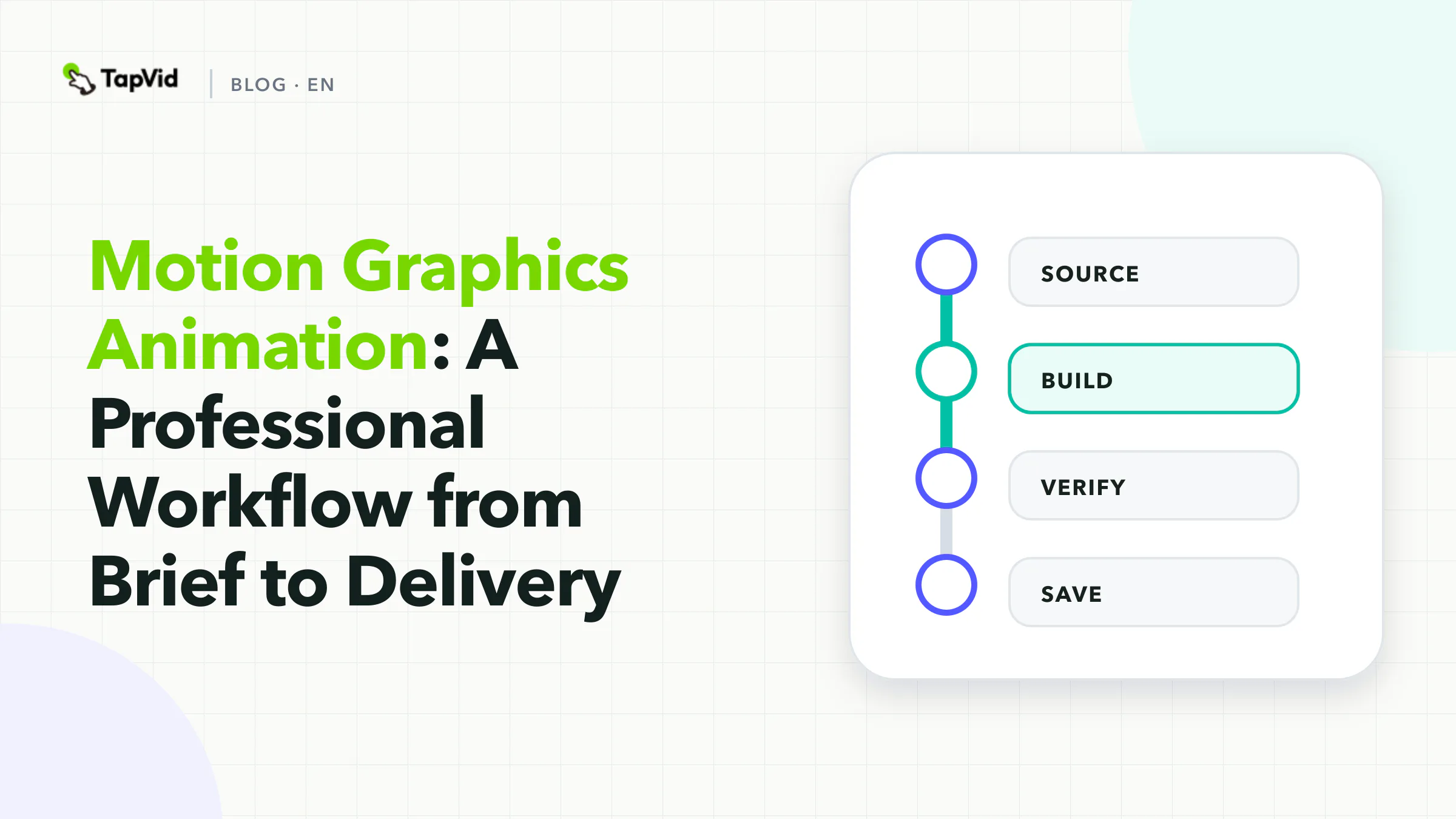
Consistency in brand motion output comes from consistency in the input process. A standard brief template for every motion project — specifying message, audience, placement, duration, and brand constraints — eliminates the ambiguity that causes revision cycles.
Review checkpoints matter as much as the brief. Structural review at storyboard stage, style review after first animation pass, and brand QA before final delivery. Teams that skip structural review pay for it in expensive late-stage revisions.
Document the outcome of every project. What worked, what required extra revision, and what the client approved without changes. Over twelve months this becomes a pattern map that makes your next project faster and your proposals more accurate.
06
Practical timeline for a brand motion design project
- Day 1-2: creative brief, message hierarchy, visual direction alignment.
- Day 3-4: storyboard or animatic with motion language defined.
- Day 5-7: first animation pass (AI-assisted for blocking, human for refinement).
- Day 8-9: client review and revision round.
- Day 10: brand QA, final export, delivery in required formats.